
Astral Refinery & Petrochemicals
Message from our CEO
Nigeria and other west African countries still rely heavily on fuel imports with West African imports hitting 69%. This situation underscores the regions continued dependency on external supply of petroleum product. Statistical data for 2025 indicates that an average of 2.05 million metric ton of gasoline is traded monthly in the region with 69% approx. 1.44 million metric ton being imported while only 31% comes from the region refineries, you would agree with me that there is a huge gap.
Over $90 billion is invested on petroleum product import to Nigeria on monthly basis. This does not sit well with Astral Group. We are accelerating the construction and establishment of a 500,000bpd refinery & petrochemical in Nigeria to close the financial gap created by huge import of petroleum product. We seek investors and partners to join hands with us in achieving this signature project.
Thank you.
Dr. Zeal Chims
Chairman
Astral Group
Executive Summary
OVERVIEW — TRANSFORMING AFRICA'S ENERGY FUTURE
- Project Name: Astral Refinery & Petrochemicals
- Tagline: Transforming Africa’s Energy Future from Within
- Type: 500,000 barrels per day (bpd) Integrated Refinery, Petrochemical & Fertilizer Complex
- Location: Delta & Rivers States, Nigeria
- Estimated Investment (Phase 1): USD $6 Billion
- Phase 1: 250,000bpd
- Phase 1B: Lubricant plant (a 150,000 MT per annum, industrial, marine, and automotive lubricants)
Project Name: Astral Petrochemicals
- Type: 2 million tons per annum, double train of 1,000,000mtpa each Petrochemical Complex
- Estimated Investment (Phase 1): USD $1.8 Billion
- Completion: Q3 2028
- Partnership: with Nigeria Oil & Gas free trade zone (FTZ)
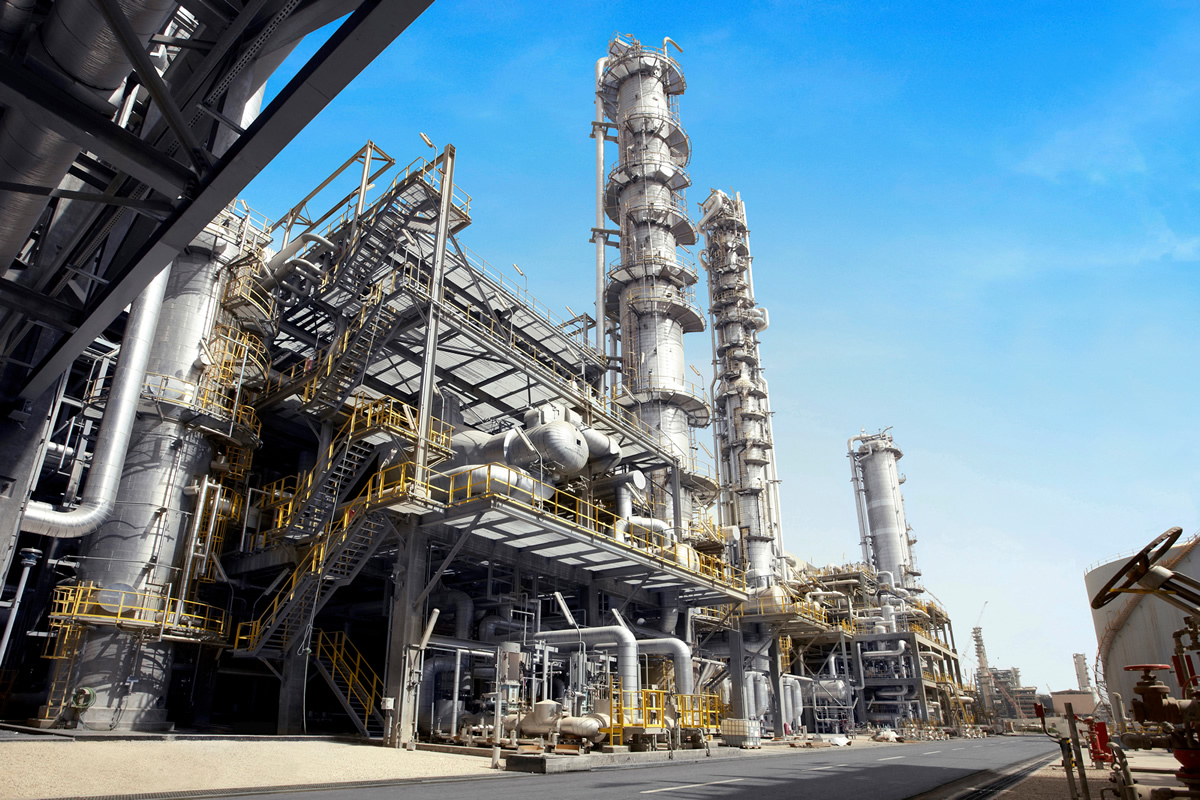
Nigeria, Africa’s second-largest oil producer, imports over 80% of its refined fuels. Astral Refinery will bridge this gap with a world-class 500,000 bpd facility producing Euro-V standard fuels, petrochemical products, and fertilizers — creating 9,500 direct jobs and powering regional industrialization. Astral Mid-scale petrochemical plant will produce polyethylene, polypropylene, methanol-to-olefins derivative, or similar, creating 9,500 direct jobs and powering regional industrialization.
Company Overview
Our Story
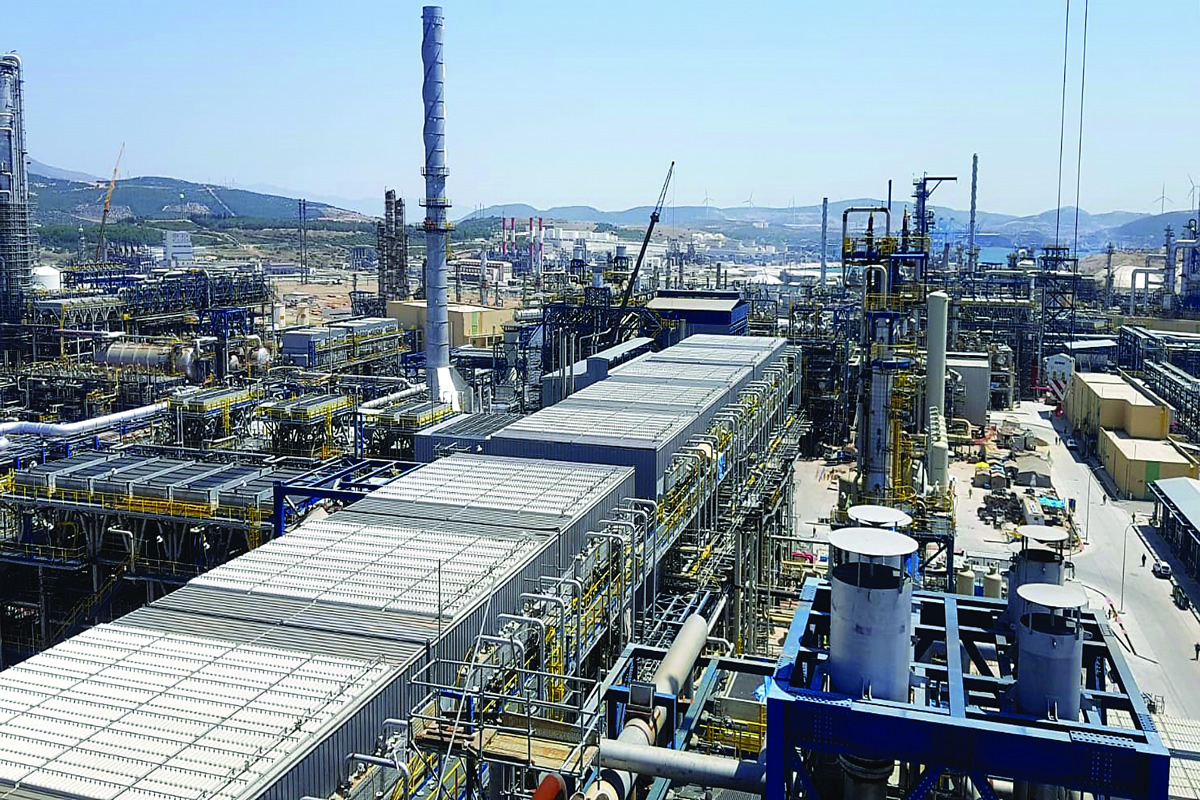
Astral Refinery & Petrochemical Company Limited is dedicated to providing innovative and sustainable energy solutions. Our commitment to excellence and industry growth drives us to deliver high-quality petroleum products while ensuring environmental responsibility. With a focus on sustainable refining and reliable supply, we aim to enhance local production, reduce import dependency, and secure energy for the future. Our strategic refining processes and innovative solutions are designed to drive energy security and economic growth.
Our License
Astral Refinery & Petrochemical Company Limited is formally licensed by the Nigerian Midstream and Downstream Petroleum Regulatory Authority (NMDPRA), having secured both a License to Establish (LTE) and a License to Construct (LTC) a 500,000 barrels-per-day (bpd) full cycle refinery in Onne, Rivers State.
These approvals position us among the emerging contributors to Nigeria’s expanding domestic refining capacity. The licenses were presented by the Authority Chief Executive, Engr. Farouk Ahmed, reinforcing our alignment with national energy development objectives. Our licensing represents more than regulatory approval—it reflects our responsibility to operate with the highest standards of safety, environmental stewardship, quality assurance, and transparency, supported by modern technologies and strong governance systems to ensure efficient and sustainable operations. As we progress toward full-scale operation, we remain focused on strengthening Nigeria’s energy security, reducing reliance on imported fuels, supporting industrial growth, and creating long-term value for stakeholders and the broader economy.
Our Mission
Our mission is to transform petroleum refining in Nigeria and Africa by delivering superior, high-quality products through safe, efficient, and environmentally responsible processes, while driving innovation, supporting local energy independence, and creating lasting value for our communities and stakeholders.
Our Vision
Our vision is to redefine the future of petroleum refining by integrating advanced technologies, Eco-friendly practices, and strategic partnerships. We aim to reduce Nigeria's dependency on fuel imports, enhance local refining capacity, and position Africa as a key player in the global energy market. By focusing on innovation and sustainability, we strive to create a refinery that not only meets industry demands but also sets new benchmarks for efficiency, reliability, and environmental consciousness. Our long-term goal is to support industrialization, job creation, and economic stability, ensuring that Nigeria and Africa at large become self-sufficient in energy production.
Our Core Values
- Integrity: We uphold the highest standards of honesty and transparency in all our operations and interactions.
- Safety: We place the safety of our employees, communities, and operations as a top priority, ensuring a secure working environment.
- Excellence: We are committed to operational efficiency, quality, and continuous improvement in every aspect of our business.
- Innovation: We embrace cutting-edge technology and innovation to remain competitive and meet the dynamic needs of the energy market.
- Sustainability: We prioritize environmentally responsible practices and innovative solutions to minimize our ecological footprint.
- Collaboration: We foster partnerships with stakeholders, government, and communities to drive shared growth and success.
Our Expertise
Product Plan: We specialize in efficient and sustainable petroleum refining, transforming crude oil into high-quality petroleum products. Our refinery ensures reliable energy supply, adhering to strict industry standards for safety, quality, and environmental responsibility.
Quality and Control Process: We ensure top-tier petroleum refining through rigorous quality control. Our advanced lab tests fuel oil, AGO, PMS, Naphtha, Jet A1 and LPFO for sulfur content, viscosity, and flashpoint, meeting international standards for safety, reliable, efficiency, and compliance.
Logistics and Export Plan: We optimize petroleum oil storage and exports through our advanced tank farm infrastructure. With strategic partnerships and streamlined logistics, we ensure efficient product distribution, meeting both local and international market demands with reliability and precision.
Workforce development: We invest in training and skill development to build a highly competent workforce. Our team undergoes rigorous training in refining operations, safety protocols, and quality assurance, ensuring efficiency, innovation, and adherence to industry best practices.
Why Choose Us
Astral Refinery & Petrochemical Company Ltd is committed to redefining petroleum refining and petrochemical with efficiency, reliability, and sustainability through advanced technology, strict quality control, and environmental responsibility.
- Advanced Refining Technology: We utilize state-of-the-art processes to deliver high-quality petroleum products that meet global standards.
- Sustainable & Eco-Friendly Practices: Our operations are designed to reduce carbon emissions and promote energy efficiency.
- Reliable Supply Chain: A strong logistics network ensures consistent product availability for local and international markets.
- Uncompromising Quality Standards: Every product undergoes rigorous laboratory testing for safety, efficiency, and compliance.
- Commitment to Growth & Innovation: We continuously invest in research, workforce development, and process improvements. We deliver excellence, sustainability, and innovation—driving reliable energy solutions that meet today's demands and tomorrow's challenges through advanced technology, strict quality control, and responsible operations.
Refinery Project Summary
Setting up a 500,000 Barrels Per Day Oil Refinery in Nigeria - A Full-Scale Industrial Blueprint
Establishing a 500,000 barrels per day (BPD) crude oil refinery in Nigeria is a monumental industrial project with vast financial, technical, regulatory, and geopolitical implications. It ranks among Africa’s most ambitious undertakings comparable in scale to the Dangote Refinery and demands years of meticulous planning, billions in capital investment, and strategic collaboration across both public and private sectors.
At full capacity, the refinery would produce a wide range of petroleum derivatives including premium motor spirit (PMS), diesel (AGO), liquefied petroleum gas (LPG), aviation fuel (Jet A1), fuel oil, bitumen, naphtha, and petroleum coke. The estimated total cost for such a refinery stands between $5 and $6 billion (1st phase), with an expected development timeline of 24 months. This includes planning, licensing, detailed engineering, financing, construction, and eventual commissioning. The required landmass is substantial 25,000 hectares ideally located in energy-accessible and logistically strategic areas such as oil-producing states like Rivers and Delta State, where we are siting our refineries.
Capital Requirements and Cost Structure for Astral Refinery
The capital expenditure (CAPEX) profile reflects the refinery’s scale and complexity. Engineering, procurement, and construction (EPC) alone could consume $5 billion. The main processing units including the crude distillation unit (CDU), vacuum distillation unit (VDU), and fluid catalytic cracker (FCC) are expected to cost around $3 to $4 billion. Off-site utilities such as power generation and water treatment facilities could require another $1.5 to $2 billion.
A $5 billion CAPEX for a 250,000 bpd refinery in Nigeria would be at the lower end of current global costs and we have:
- Existing infrastructure support (access to port and good roads network)
- Major petrochemical integration in Delta State
- Efficient EPC execution
- Moderate complexity configuration
Our reasonable CAPEX allocation could look like this:
| Area | % of CAPEX | Cost (USD Million) |
|---|---|---|
| Crude Distillation Unit (CDU) | 10% | 500 |
| Vacuum Distillation Unit (VDU) | 4% | 200 |
| Fluid Catalytic Cracker (FCC) / Hydrocracker Diesel Hydrotreaters | 12% | 600 |
| Naphtha Hydrotreater & Reformer | 6% | 300 |
| LPG Recovery & Gas Plant | 8% | 400 |
| Sulfur Recovery Units | 2% | 100 |
| Hydrogen Plant | 4% | 200 |
| Utilities & Offsites | 12% | 600 |
| Tank Farm & Storage | 8% | 400 |
| Marine Terminal / Jetty | 6% | 300 |
| Power Generation Facilities | 5% | 250 |
| Water Treatment & Effluent Systems | 3% | 150 |
| Buildings, Control Room & Safety Systems | 3% | 150 |
| Pipelines & Loading Facilities | 4% | 200 |
| Engineering, Procurement & Construction Management | 7% | 350 |
| Contingency | 4% | 200 |
| Total | 100% | 5,000 |
Simplified Breakdown by Major Category
| Category | Cost (USD Billion) |
|---|---|
| Process Units | 2.40 |
| Storage & Export Facilities | 0.70 |
| Utilities & Infrastructure | 1.00 |
| EPC Management | 0.35 |
| Contingency | 0.20 |
| Other Facilities | 0.35 |
| Total | 5.00 |
Specific Infrastructure Considerations
Astral refinery project is a greenfield site in Rivers State and Delta State, coastal states has additionally requirements:
- Dredging and marine works
- Flood protection and ground improvement
- Staff housing and logistics facilities
- Dedicated gas pipeline connection
- Security infrastructure
These $300–800 million has been already captured in the CAPEX.
Construction Workforce
Peak construction manpower for the Astral 250,000 bpd refinery:
| Phase | Personnel |
|---|---|
| Early Works | 1,000 |
| Civil & Structural Peak | 700 |
| Mechanical/Electrical Peak | 600 |
| Commissioning | 1,500 |
Peak workforce can exceed 15,000 workers on site.
| Phase | Duration |
|---|---|
| FEED & Permitting | 12 months |
| EPC | 15 months |
| Commissioning | 6 months |
| Total | 2 years and 7 months |
The Astral refinery shall be well-executed, producing roughly 95,000 bpd gasoline, 70,000 bpd diesel, and 25,000 bpd jet fuel and could generate annual revenues in the range of $7 billion, with refining margins ultimately determining profitability. Depending on margin assumptions, payback could range from about 6–12 years.
Additional infrastructure like storage tanks for crude and refined products, pipelines for intake and evacuation, marine jetties, internal roads, a gas-powered or cogeneration power plant (200MW), civil works and infrastructure, licensing fees, technology transfer, project management, environmental mitigation, and contingency buffers account is considered as the project opex.
Refinery Configuration and Technical Components
Our project team are aware that to handle Nigerian crude efficiently and produce a comprehensive product range, the refinery must be configured with a high Nelson Complexity Index (typically 10). This means incorporating several sophisticated units including crude and vacuum distillation units, FCC, hydrocracker, naphtha and diesel hydrotreaters, a delayed coker, isomerization and reforming units, an alkylation unit, a hydrogen plant, and a sulfur recovery unit. Supporting infrastructure such as water treatment plants, air separation units, control rooms (SCADA/DCS), and comprehensive fire and safety systems are indispensable.
Licensing and Regulatory Framework
We are accelerating a comprehensive regulatory compliance procedure for the refinery, gas plant and petrochemical project, and we have made major inroads. The licensing process could be rigorous and multi-layered. It begins with obtaining a License to Establish (LTE) from the Nigerian Upstream Petroleum Regulatory Commission (NUPRC). This is followed by a License to Construct (LTC), and finally a License to Operate (LTO) upon project completion. Other regulatory clearances include an Environmental Impact Assessment (EIA) Certificate, a Community Development Agreement (CDA), and tax-related exemptions such as pioneer status or gas utilization incentives through the Federal Inland Revenue Service (FIRS) and the Central Bank of Nigeria (CBN). Key regulatory agencies involved include NUPRC, the Nigerian Midstream and Downstream Petroleum Regulatory Authority (NMDPRA), NESREA, the Federal Ministry of Environment, and state-level environmental and development bodies.
Site Selection Criteria
Choosing the right location is crucial. Therefore we did a site advisory study and came up with the best site in Rivers State and Delta State, ideal sites should offer access to crude oil pipelines or Floating Production Storage and Offloading units (FPSOs), proximity to a deep seaport, gas infrastructure for power generation, and relatively flat, non-swampy terrain. Above all, community buy-in and security assurances from the host region are critical for project stability.
Human Capital and Employment Impact
The refinery’s construction phase is expected to generate between 20,000 and 30,000 jobs, spanning engineering, civil works, logistics, and plant fabrication. Once operational, the facility will employ 2,000 to 5,000 permanent staff. Training programs for technical, process, and safety personnel will be necessary to ensure world-class standards are met.
Power and Infrastructure Requirements
Massive energy and utility infrastructure will be needed. Power demand could range between 150 to 200 megawatts, supplied through gas turbines or compressed natural gas systems. Daily water requirements are estimated at 15,000 cubic meters, necessitating large-scale water intake, treatment, and recycling systems. Roads, logistics hubs, wastewater treatment facilities, and multi-modal evacuation systems (pipeline, rail, marine, and trucking) are essential for seamless operations.
Crude Feedstock and Supply Chain
A key determinant of success lies in securing stable and long-term crude supply contracts, reason why the Astral Energy investment team is collaborating with AstralEnergies Ltd for development of 2 major oil blocks and the purchase of WTI crude oil from USA and Merrey 16 from Venezuela as feedstock for the entire 500,000bpd nameplate. This could involve joint ventures with NNPC Limited, marginal field operators, or offshore suppliers. The Astral refinery will have sufficient crude storage capacity to cover at least 60 days of full operations equivalent to nearly 10 million barrels. For distribution, a robust product marketing and logistics network comprising inland depots, pipelines, and export terminals is required.
Financing Models and Capital Structure
A refinery of this magnitude demands a blended financing model. Equity investors whether institutional, strategic, or sovereign would typically contribute 70 percent of the capital (roughly $3.6 billion). The remaining 30 percent would be raised via long-term debt instruments sourced from multilateral institutions such as the African Development Bank (AfDB), Afreximbank.
Timeline and Development Phases
The Astral project development process unfolds over several overlapping phases. Initial feasibility studies typically last six to twelve months, followed by regulatory licensing and environmental approvals which may take another six to eighteen months. Front-End Engineering Design (FEED) and detailed engineering is six months, while financial closure took us about 2 years. The actual construction phase via EPC contractors is 15 months, with commissioning and start-up activities taking another six months. In total, the full project lifecycle spans 2 years and 7 months.
Strategic Risks and Mitigation Plans
Several risks could derail or delay the project ranging from Niger Delta militancy, political instability, FX volatility, crude supply disruptions, regulatory bottlenecks, and skilled labor shortages. The Astral project team came up with a comprehensive risk mitigation strategies include government-backed Memorandums of Understanding (MoUs), comprehensive insurance (political, terrorism, construction all-risk), phased refinery execution, and partnerships with reputable global EPC and operations firms.
Potential Strategic Partners
We have secured collaboration with NNPCL Limited which is essential, not only for crude access but also for regulatory alignment. We have technical partnerships with global EPC giants. Knowledge sharing or benchmarking could also be pursued with the Dangote Group. Oil majors like Chevron, Shell, or ExxonMobil may serve as both crude suppliers and investors in strategic JV structures.
The Astral 500,000 BPD refinery is more than just an industrial asset, it's a national economic game-changer. It has the potential to significantly deepen Nigeria’s energy security, slash petroleum imports, save billions in foreign exchange, and create tens of thousands of direct and indirect jobs. Beyond energy, it will stimulate growth in construction, manufacturing, logistics, and local enterprise development.
To succeed, we are building the project on the foundation of sound technical and financial planning, credible and experienced partners, strong government support, and an ironclad crude supply and offtake framework. If well-executed, this refinery can become a flagship symbol of Nigeria’s industrial resurgence and global energy relevance.
Production & Revenue Data
We are building a 250,000 bpd with the capability of expansion and deep-conversion similar to what would be considered a modern export-oriented refinery processing mostly light-to-medium crude.
Assumptions
- Crude throughput: 250,000 bpd (1st phase)
- Utilization: 95%
- Operating days: 347 days/year equivalent
- High conversion units (FCC, hydrocracker, delayed coker)
- Focus on gasoline, diesel, jet fuel, naphtha and PMS
Daily Product Slate
| Product | Yield % | Volume (bpd) |
|---|---|---|
| LPG | 5% | 12,500 |
| Naphtha | 10% | 25,000 |
| Gasoline (PMS) | 38% | 95,000 |
| Jet Fuel | 10% | 25,000 |
| Diesel (AGO) | 28% | 70,000 |
| Fuel Oil/Marine Fuel | 4% | 10,000 |
| Bitumen | 1% | 2,500 |
| Sulfur, Coke & Others | 4% | 10,000 |
| Total | 100% | 250,000 |
Annual Production
At 95% utilization:
Effective throughput: 250,000 × 365 × 95% = 86.69 million barrels/year
| Product | Annual Barrels |
|---|---|
| LPG | 4.33 million |
| Naphtha | 8.67 million |
| PMS Jet | 32.94 million |
| Fuel | 8.67 million |
| Diesel | 24.27 million |
| Fuel Oil | 3.47 million |
| Bitumen | 0.87 million |
Indicative Revenue Model
| Product | Price ($/bbl) |
|---|---|
| LPG | 70 |
| Naphtha | 75 |
| PMS Jet | 95 |
| Fuel | 100 |
| Diesel | 105 |
| Fuel Oil | 65 |
| Bitumen | 60 |
Annual Revenues
| Product | Revenue ($ billion/year) |
|---|---|
| LPG | 0.30 |
| Naphtha | 0.65 |
| PMS Jet | 3.13 |
| Fuel | 0.87 |
| Diesel | 2.55 |
| Fuel Oil | 0.23 |
| Bitumen | 0.05 |
| Total | ≈ 7.8 billion |
Storage Requirements
Typical storage targets:
| Product | Days Storage | Tankage Needed |
|---|---|---|
| PMS | 20 | 1.9 million bbl |
| Diesel | 20 | 1.4 million bbl |
| Jet Fuel | 15 | 375,000 bbl |
| LPG | 10 | 125,000 bbl |
| Naphtha | 15 | 375,000 bbl |
Total product storage would be roughly 4–5 million barrels.
Utilities Demand
A refinery of this size typically requires:
- Power: 200 MW
- Water intake: 25,000 m³/day
- Hydrogen production: 80 MMSCFD
- Steam generation: 2,000 tonnes/hour